The Depth Imperative: How America's Most Discerning Travelers Redefined What Luxury Actually Means

For a long time, the language of luxury travel was largely a language of surfaces. Thread counts. Michelin stars. Butler-to-guest ratios. Infinity pools that appeared to dissolve into the horizon at precisely the angle a photographer would choose. These were the markers by which premium experiences were measured, marketed, and—eventually—replicated until they ceased to feel premium at all.
Something has shifted. Among the most experienced, most widely traveled segment of the American luxury market, a quiet but unmistakable reorientation is taking place. The travelers who once competed for suites at the same handful of iconic properties are increasingly found in places their peers have never heard of, doing things that resist easy description in a social caption. They are not traveling less ambitiously. They are traveling with a fundamentally different ambition.
The Problem With Perfection
The irony of the highly curated luxury experience is that its very perfection can become its greatest flaw. When every element of a journey has been polished to remove friction, surprise, and imperfection, what remains is often something that feels—despite its considerable expense—oddly inert. Beautiful, certainly. Comfortable, without question. But somehow hollow at the center.
This is the paradox that a growing number of affluent American travelers are naming openly: the more a destination or experience has been optimized for the luxury market, the less it tends to offer the thing that travel, at its most essential, is supposed to provide—genuine encounter with a world that is not your own.
The rise of what some in the industry are calling experiential authenticity is not, at its core, a rejection of quality. It is a rejection of performance in place of experience. The traveler who once sought the most celebrated resort in Bali is now asking a different question: not where the best infinity pool is, but where they might spend a morning with a master weaver in a village that has never hosted a travel influencer. Not which restaurant has the most impressive wine list, but whose grandmother makes the most extraordinary mole in a town three hours from the nearest airport.
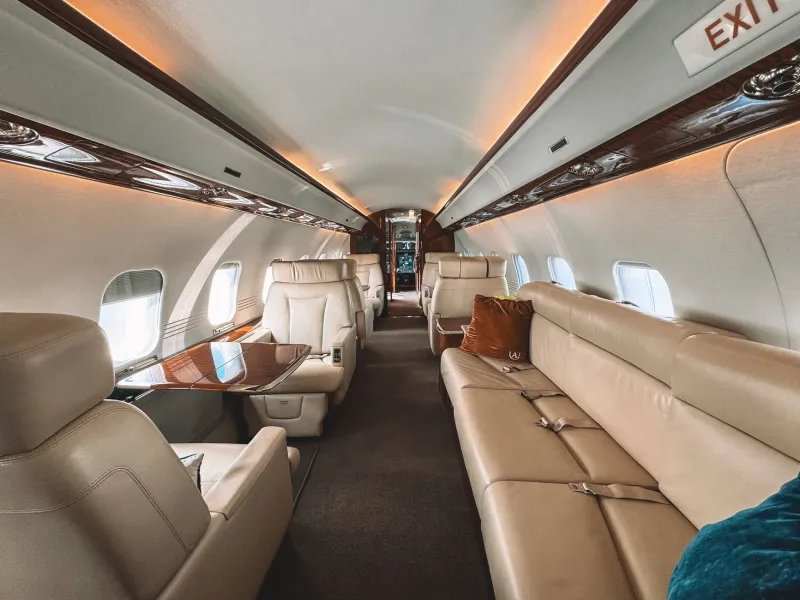
These are not budget travelers making a virtue of necessity. These are individuals who arrive by private aircraft and depart with stories that cannot be photographed adequately—and who have come to regard that ineffability as the truest measure of value.
What Genuine Connection Actually Requires
Authenticity in travel is frequently invoked and rarely delivered, in part because it demands something that the conventional luxury hospitality model is not designed to provide: genuine access to people and places that have not been prepared for your arrival.
The most meaningful travel moments reported by experienced American luxury travelers share a common characteristic—they involve real reciprocity. A conversation with a local historian who is passionate about their subject, not performing that passion for a fee. A meal in a private home where the host's curiosity about their guest is as evident as the guest's curiosity about them. A private audience with an artist or craftsperson who agrees to the encounter not because it has been arranged by a hospitality operator, but because a trusted intermediary made a genuine introduction.
This kind of access cannot be manufactured. It can, however, be cultivated—and this is where the role of an elite concierge service becomes something qualitatively different from logistics management. The concierge teams best positioned to deliver authentic experience are those with deep, long-standing relationships in the places they represent: not relationships with hotel operators, but with communities, institutions, and individuals who extend access out of genuine regard rather than commercial obligation.
Private aviation plays a defining role in this equation. The ability to arrive at a regional airfield rather than a major international hub—to land in the Yucatán interior rather than Cancún, in rural Tuscany rather than Rome—is not merely a comfort consideration. It is an access consideration. The places where authentic experience awaits are rarely the places that commercial aviation serves, and the freedom to reach them directly, quietly, and without the corrosive overhead of mass-transit infrastructure is what makes genuine immersion possible in the first instance.
The New Metrics of Premium Travel
If the old metrics of luxury travel were largely quantitative—square footage, star ratings, number of amenities—the emerging metrics among the most discerning American travelers are almost entirely qualitative. They are asking questions that no booking platform is equipped to answer:
How many people have had this exact experience before me? The answer they are seeking is: very few, or none.
Will this moment be replicable? The ideal answer is: not easily, and perhaps not at all.
Did I encounter something that genuinely surprised me? Not in the engineered sense of a staged welcome experience, but in the sense of genuine discovery—of learning something about the world, or about themselves, that they did not anticipate.
Will I remember this in twenty years? This, perhaps more than any other question, is the one that now guides the travel decisions of those operating at the highest level of the market. The suite that costs ten thousand dollars a night fades in memory. The afternoon spent in the studio of an aging ceramicist in Oaxaca, arranged through a relationship that took years to build, does not.
How Forward-Thinking Concierge Services Are Responding
The travel services best positioned for this moment are those that recognized the shift before it became a trend—those that were already investing in the kinds of relationships and local intelligence that authentic experience demands, rather than simply curating a portfolio of the world's most celebrated properties.
At Aria Sky VIP, this orientation has always been foundational. Our approach to premium travel is built on the conviction that the extraordinary and the authentic are not in tension—that the highest expression of luxury is an experience so specific, so genuinely connected to a place and its people, that it could not have been delivered to anyone else in quite the same way.
This means that when a client expresses a desire for something real—not just something expensive—we do not treat that as a constraint. We treat it as the most interesting brief we could receive. It means deploying local relationships that extend well beyond the hospitality sector, leveraging the geographic freedom that private aviation provides to reach places the luxury market has not yet homogenized, and exercising the kind of editorial judgment that distinguishes between an experience that looks extraordinary and one that genuinely is.
The travelers who have arrived at this understanding are not disillusioned with luxury. They are, if anything, more demanding than they have ever been—because they now know precisely what they are looking for, and they are unwilling to accept anything less. For those of us in the business of delivering the extraordinary, that clarity is not a challenge. It is an invitation.