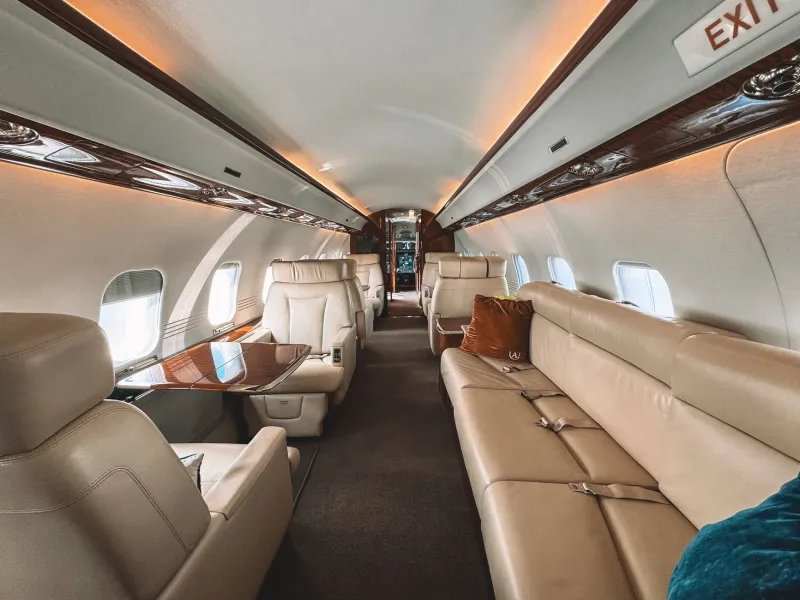
The Invisible Calendar: Mastering the Strategic Windows That Define Peak Luxury Travel

For the uninitiated, peak travel season is defined by school calendars, federal holidays, and whatever destinations happen to be trending on social media in a given month. For the world's most sophisticated travelers, that calendar is largely irrelevant—and deliberately so.
At the highest levels of luxury travel, timing is not a logistical consideration. It is a strategic discipline, informed by decades of firsthand observation, cultivated local intelligence, and an understanding of crowd dynamics that extends far beyond the simple advice to avoid summer in Paris or Christmas week in New York. The travelers who experience the world at its absolute finest are not necessarily those with the largest budgets. They are, more often, those who have learned to read a far more nuanced calendar than the one hanging on the wall.
Why the Ultra-Wealthy Crowd Matters—And How to Avoid It
There is a common assumption that luxury travel, by definition, insulates the traveler from crowds. In practice, the opposite is frequently true. The world's most exclusive resorts, private clubs, and access-restricted experiences draw from the same relatively concentrated pool of ultra-high-net-worth travelers—and that pool has its own predictable patterns.
The Hamptons empties in September. Aspen's private club scene reaches saturation during specific weeks in January and March. The most coveted Mediterranean charter routes see their peak demand compressed into a remarkably narrow window between late June and mid-August. Understanding these rhythms—and the specific dates around which private aviation demand surges, making aircraft availability tighter and positioning costs higher—is foundational knowledge for any traveler who wishes to access the same experiences with meaningfully greater ease, privacy, and value.
This is not about budget optimization. It is about experiential optimization. A private island that accommodates eight guests during peak season may accommodate four during shoulder periods, with the same staff-to-guest ratio producing a dramatically more personalized experience. The mathematics of exclusivity shift considerably when the crowd—even the exclusive crowd—has moved on.
The Architecture of the Shoulder Season
The concept of shoulder season is familiar to any frequent traveler, but its application at the luxury level is considerably more nuanced than the conventional wisdom suggests. For discerning travelers, the most rewarding windows are not simply the weeks immediately before or after peak demand. They are specific, often brief intervals defined by the convergence of optimal conditions—weather, staffing, cultural programming, and reduced competition for access.
Japan in the first two weeks of November offers an instructive example. The autumn foliage season draws significant international attention, but the precise peak varies by region and by year, tracked obsessively by local observers. Travelers with the right contacts and the flexibility to adjust arrival dates by as few as three days can find themselves witnessing one of the natural world's most extraordinary displays with a fraction of the usual presence. The same principle applies to the lavender fields of Provence in late June, the aurora borealis viewing windows in northern Scandinavia, and the wildebeest migration patterns across the Serengeti—each governed by rhythms that reward preparation and penalize assumption.
For US-based travelers, domestic windows are equally worth understanding. The national parks of the American Southwest—Zion, Bryce Canyon, Arches—reach their most dramatic visual states in late October and early November, after the summer crowds have dissolved but before winter closures restrict access. Private aircraft access to smaller regional airports near these destinations becomes significantly more flexible during these periods, and the properties that cater to discerning visitors can offer a level of attention that the high season structurally prevents.
Cultural Events and the Access Advantage
Beyond seasonal patterns, the world's cultural calendar contains a series of events that represent extraordinary access opportunities for travelers who understand how to approach them. These are not the events featured in mainstream travel roundups. They are the private vernissages, the invitation-only auction previews, the collector dinners held alongside major art fairs, the member-only festival programming that exists in parallel to—and entirely separate from—the public-facing events.
Art Basel in Miami Beach, held each December, is widely known. What is less widely understood is the constellation of private events, studio visits, and collector gatherings that unfold in the days surrounding it—experiences accessible only through specific relationships and available only to those who have planned months in advance. The same is true of the major watch and jewelry fairs in Geneva, the private programming surrounding the Cannes Film Festival, and the members-only cultural programming that accompanies Davos each January.
For the traveler who wishes to participate meaningfully in these worlds rather than simply observe them from a distance, the planning horizon is not weeks but months—and sometimes longer. Private aviation plays a critical role in this context, providing the scheduling flexibility to respond to last-minute access opportunities without the constraints of commercial routing. When a confirmed invitation to a private studio visit materializes forty-eight hours before the event, the ability to reposition a light jet is not a luxury. It is the mechanism by which the opportunity is realized at all.
Planning at the Horizon
The travelers who navigate this calendar most effectively share a common characteristic: they plan not for the next trip, but for the next several years simultaneously. Certain experiences—a specific private villa during a particular festival week, a berth on a limited-season expedition vessel, access to a cultural event with a restricted invitation list—require commitments made twelve to eighteen months in advance. For those unaccustomed to this horizon, the requirement can feel excessive. For those who have experienced what it delivers, it is simply the cost of entry into a different order of travel entirely.
At Aria Sky VIP, our advisory relationships are built on precisely this long-range perspective. We maintain ongoing intelligence about the world's most strategically significant windows, and we work with our members to position them not merely for the journeys they are planning today, but for the ones they have not yet imagined. The invisible calendar is always in motion. The question is whether you are reading it—or simply reacting to it.