The Unwritten Calendar: How the World's Most Sophisticated Travelers Decode the Hidden Rhythms of Extraordinary Destinations
Every destination presents two calendars to the world. The first is the one that appears in travel publications, booking platforms, and well-meaning online forums: high season, shoulder season, and the months that conventional wisdom suggests avoiding. This calendar is accurate, as far as it goes. It is also, for the most discerning traveler, almost entirely beside the point.
The second calendar is invisible to the casual observer. It is written in the agricultural rhythms of a valley, the liturgical schedule of a monastery, the migratory patterns of a species, the private opening dates of an estate that receives no public visitors. It is encoded in the knowledge of a winemaker who knows which three weeks of the year her cellar is at its most extraordinary, and in the understanding of a marine guide who knows precisely when the current shifts to make a particular dive site genuinely transcendent.
Accessing this second calendar is not a matter of research. It is a matter of relationship.
The Limits of Conventional Timing
The standard framework for travel timing is built around two variables: weather and crowds. Visit in high season and you will enjoy reliable conditions but compete with every other traveler who made the same calculation. Visit in low season and you will find space and value, but potentially encounter the limitations that drove other travelers away in the first place.
This framework is adequate for the traveler whose primary goal is a pleasant vacation. It is insufficient for the traveler whose goal is an experience that could not have happened at any other moment, in any other configuration.
"Conventional peak season is almost never when I send my clients," says a travel strategist who has spent two decades advising a private clientele across North America. "The hotels are full, the restaurants are stretched, and the destination is performing at a level of stress rather than ease. The moments that become genuinely unforgettable almost always happen outside those windows."
The question, then, is not whether to avoid conventional peak timing—among sophisticated travelers, that conclusion is increasingly well understood. The question is what to seek instead, and how to find it.
The Intelligence Behind the Timing
The knowledge that makes masterful travel timing possible is assembled from sources that no algorithm currently aggregates. It lives in the memory of a head sommelier who has observed the same property through forty harvests. It resides in the relationship between a private aviation provider and a remote airstrip operator who knows when the seasonal winds make approach conditions exceptional. It accumulates in the notebooks of guides who have watched a particular landscape transform through every configuration of light, weather, and season.
This intelligence is not proprietary in any formal sense. It is simply human—the product of attention, experience, and trust extended over time. And because it is human, it is transmitted through relationships rather than subscriptions.
Consider the example of a client who wished to experience the Champagne region of France with genuine depth. The obvious answer—harvest season, late September into October—would have placed her in the middle of the most photographed, most visited weeks of the viticultural year. Her advisor proposed something different: a visit in late winter, when the vines are dormant, the roads are quiet, and the winemakers—freed from the obligations of harvest—have genuine time for conversation. The meals were unhurried. The cellars were peaceful. The producers, accustomed to receiving visitors who wanted spectacle, were visibly moved by a guest who wanted understanding.
The experience bore no resemblance to what a conventional travel calendar would have suggested. It was, by every measure that mattered, superior.
Cultural Calendars and the Art of Alignment
Beyond agricultural and ecological rhythms lies another layer of timing intelligence: the cultural calendar. Festivals, religious observances, civic ceremonies, and seasonal traditions transform destinations in ways that are profound and, to the uninitiated, entirely unpredictable.
The traveler who arrives in Kyoto during the brief window of autumn illuminations at a particular temple—an event announced only through local channels, attended almost exclusively by residents—encounters something categorically different from the traveler who arrives during the internationally publicized maple-viewing season. Both experiences involve the same city. The similarity largely ends there.
The same principle applies across the American landscape. The experienced advisor knows which week in the Sonoran Desert the saguaro bloom reaches its peak, and that this window rarely aligns with the dates that travel publications associate with the region. They understand the particular rhythm of a New England fishing village in the week after the summer crowds depart—when the light is still extraordinary, the water is at its warmest, and the community returns to itself in ways that visitors from July would not recognize.
Private Aviation and the Flexibility Dividend
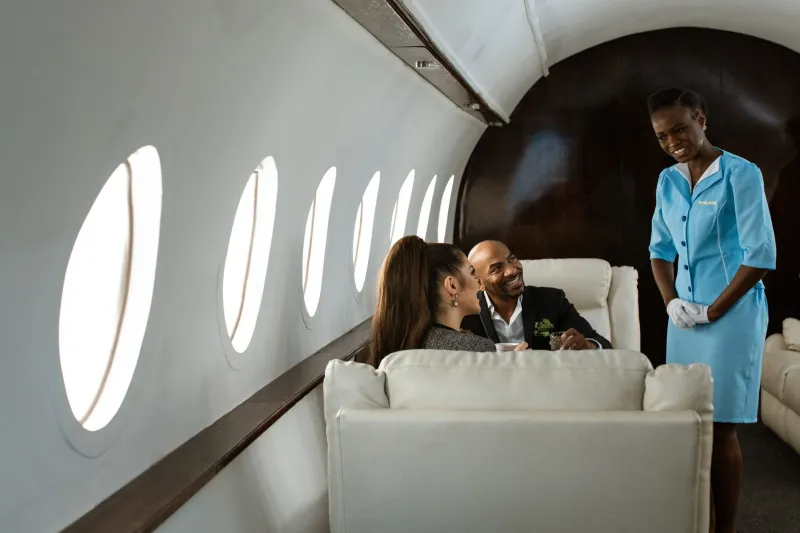
One of the less-discussed advantages of private aviation in the context of sophisticated travel timing is the flexibility it confers on planning. Commercial travel schedules impose a rigidity that can make nuanced timing genuinely difficult to execute. When the window of optimal experience is measured in days rather than weeks—and it often is—the ability to depart on forty-eight hours' notice, route through a secondary airport closer to a remote destination, or adjust departure times to align with conditions on the ground is not a convenience. It is a strategic advantage.
The clients who travel most masterfully are, almost without exception, those whose transportation infrastructure is sufficiently flexible to honor the intelligence their advisors provide. The finest timing insight in the world is of limited value if the logistics cannot respond to it.
The Compound Return of Accumulated Knowledge
What distinguishes the most exceptional travel advisors in the field is not access to a proprietary database of optimal travel windows. It is the compound return on years of attentive observation, cultivated local relationships, and the discipline to share that knowledge with clients who are prepared to act on it.
This knowledge does not depreciate. A winemaker's relationship with an advisor deepens over a decade of visits. A guide's trust in a client who has returned to the same landscape five times over fifteen years produces a quality of access and candor that no first-time visitor can replicate.
At Aria Sky VIP, we understand timing not as a scheduling function but as a form of intelligence—one that is assembled slowly, held carefully, and applied with precision on behalf of clients who understand that the difference between a remarkable journey and a merely pleasant one often comes down to a single week, a single season, a single relationship cultivated long enough to bear extraordinary fruit.
The unwritten calendar is always there, for those who know how to read it.