The Unhurried Art: Why America's Most Discerning Travelers Are Trading Itineraries for Immersion
There is a particular kind of exhaustion that follows the perfectly optimized trip. Every landmark photographed. Every Michelin-starred table conquered. Every cultural institution dutifully attended. The itinerary executed with military precision — and yet, somewhere between the third museum and the fourth cocktail reception, something essential was lost. That something, increasingly, is the point.
Among America's most refined travelers, a quiet but consequential rebellion is taking shape. It is not loud, and it carries no manifesto. It announces itself instead in longer bookings, fewer destinations, and a willingness — even an eagerness — to let a place unfold on its own terms. This is the philosophy of immersive slowness, and it is redefining what elite travel means in the twenty-first century.
The Tyranny of the Maximized Itinerary
For decades, the prevailing logic of luxury travel rewarded density. The more destinations visited, the more experiences accumulated, the more impressive the journey appeared. Status, in this framework, was measured in passport stamps and reservation confirmations. A two-week European trip might span five countries, eight cities, and a dozen headline experiences — all of it impressive on paper, and curiously hollow in memory.
"The travelers who come to us having done it that way before are often the most enthusiastic converts to a different approach," says one senior luxury travel advisor who works exclusively with high-net-worth clients across the United States. "There's a moment of recognition — sometimes it takes years — where they realize they remember almost nothing specific about those trips. They remember being tired. They remember the logistics. But the places themselves? They've blurred together."
This is not a minor observation. It points to something fundamental about how human memory and meaning are actually constructed. Depth, not breadth, is what the mind retains. Connection, not coverage, is what transforms a journey into something that genuinely alters a person.
What Slowness Actually Looks Like
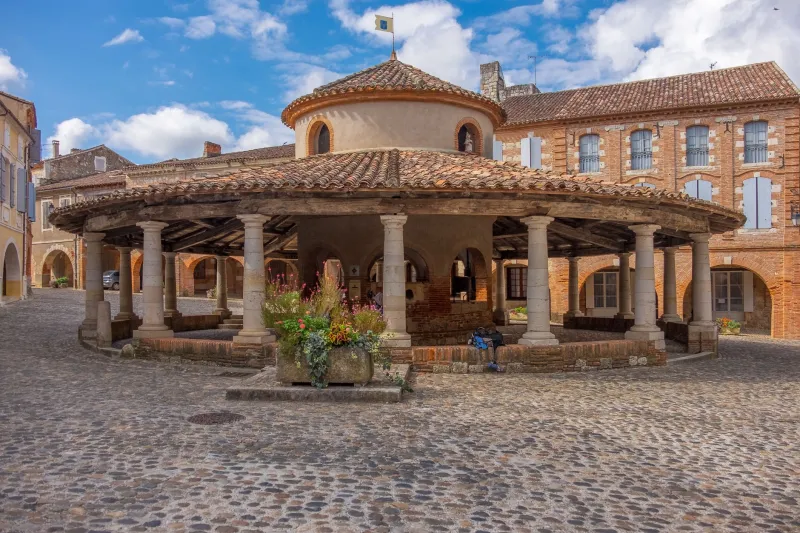
For those who have embraced this philosophy, the practical expression varies considerably. Some choose a single villa in the Umbrian countryside for three weeks, watching the same hillside shift from morning gold to afternoon haze to evening violet — and finding, in that repetition, a kind of revelation unavailable to the weekend visitor. Others anchor themselves in a single neighborhood of a great city, returning to the same café each morning until the owner begins setting aside the table by the window without being asked.
The common thread is not passivity. Slow travel is not the absence of engagement — it is the pursuit of a different quality of engagement entirely. It is the difference between observing a culture and, however briefly, inhabiting one.
"My clients who stay four weeks in one place always come back changed in a way that my clients who visit four countries in two weeks simply do not," notes another advisor who specializes in bespoke extended-stay arrangements for families of significant means. "They've had time to become regulars somewhere. They've had unexpected conversations. They've gotten lost and found something better than what they were looking for. That's not something you can schedule."
The Unexpected Discovery as the True Luxury
Perhaps the most compelling argument for slowness is the one that resists advance planning entirely: the unexpected discovery. The courtyard that appears around an unmarked corner on the seventh day of walking the same route. The local festival that no travel publication had thought to mention. The friendship formed over a shared table that persists, improbably, for years.
These are the experiences that cannot be curated, pre-booked, or guaranteed. They emerge only from the kind of unhurried presence that a compressed itinerary structurally prevents. And among travelers who have already accessed everything that money and influence can reliably secure, these unrepeatable moments have become the ultimate currency.
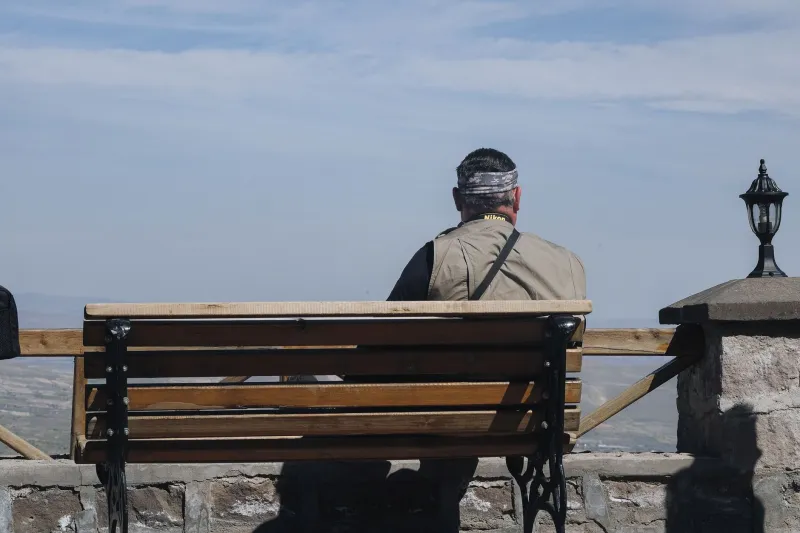
One client, a private equity executive based in New York who has traveled extensively across six continents, described spending five weeks in a single coastal village in southern Portugal — an experience he had initially approached with mild skepticism. "By the end of the second week, I knew the fishermen by name. I knew which bakery opened earliest. I had a favorite bench. I had, in some meaningful sense, a life there — a small one, a temporary one, but a real one. I have never felt more rested or more alive on any trip I have taken, and I have taken extraordinary trips."
The Role of the Right Partner
It would be a mistake to assume that slow travel is, in any sense, the simpler or less demanding form of luxury. In truth, it requires more sophisticated planning, not less. An extended stay in a single location demands a different caliber of property, a more nuanced understanding of the destination's rhythms and seasons, and a level of logistical coordination that goes well beyond booking a suite and a car transfer.
The finest travel advisors understand that arranging three weeks in one place well is considerably more complex than arranging three days in each of seven places. The property must be genuinely exceptional — not merely comfortable, but worthy of prolonged habitation. The supporting arrangements — private chefs, curated introductions to local figures, access to experiences that reveal themselves only over time — must be assembled with both precision and flexibility.
This is precisely where a true concierge partnership demonstrates its value most clearly. The advisor who knows a destination not from a familiarity sheet but from personal relationship and repeated visits can identify the property that will reward a month-long stay in ways a weekend visitor would never discover. They can arrange the introduction to the winemaker, the private lesson with the ceramicist, the dinner invitation that arrives not through a publicist but through genuine local connection.
A Different Measure of Success
The travelers who have adopted this philosophy speak consistently about a recalibration of what a successful journey means. Success, in the old framework, was measurable: destinations visited, experiences completed, photographs taken. In the new framework, success is considerably harder to quantify — and considerably more meaningful.
"I used to come home from trips and immediately start planning the next one," said one client, a retired technology entrepreneur based in San Francisco. "Now I come home and I need time to process what happened. There's something to sit with. That's when I know the trip was worth it."
At Aria Sky VIP, we have observed this shift with both admiration and purpose. The travelers who seek genuine immersion are among the most thoughtful and intentional we have the privilege of serving. Their journeys are not defined by how much ground they cover, but by how deeply they allow themselves to be changed by a single extraordinary place.
The most refined itinerary, it turns out, may be the one that asks the least of the clock — and the most of the traveler.